Sunday, March 23, 2014

Retro Review: Oniisama E ( Dear Brother ) episode 2- also, Yuri Panel coming up!

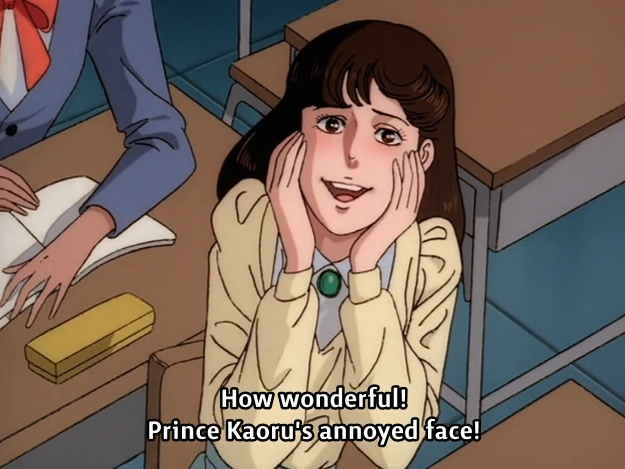
This episode has nothing meaty in the way of yuri- just the student body continuing to fangirl over Rei and Kaoru
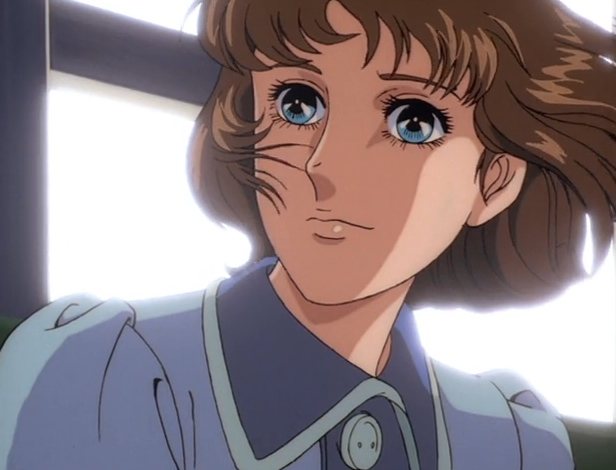
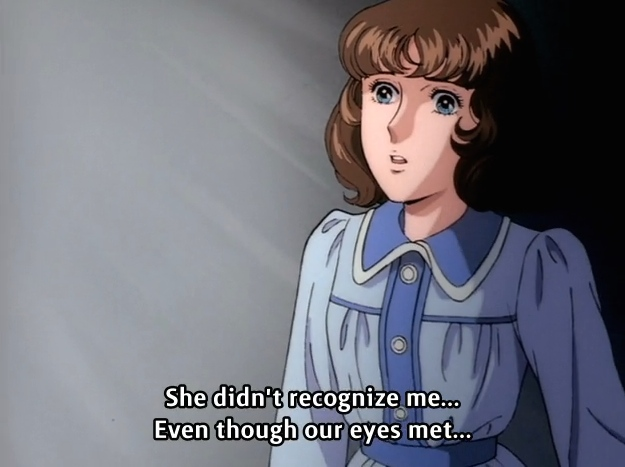
and Nanako angsting when Rei doesn't seem to recognize her
but it's a meaty episode in terms of plot progression. This episode clarifies exactly what Nanako's relationship to Takehiko is from her perspective- his perspective hasn't fully unfurled for us yet- and shows us the Sorority's selection of its candidates and the beginning of the fallout from it.

I kind of pointlessly wonder if Nanako would still be writing Takehiko about her daily life in the form of letters- or even email- if this series were rebooted today. Her desire to write about her mundane life in a way that guarantees that someone will read it- without even needing a response, just knowing that it's being read by someone who understands without necessarily being involved in her life- is pretty much pre-internet blogging. I was like, "Man, Nanako, he doesn't care what outfits you wore each day this past week," but then I remembered that I've written posts in the personal blog this blog grew out of being like, "After I bought a sombrero, I got a blueberry muffin!" Basically, if Oniisama E were rebooted, I think Nanako would be like, "Please be my brother! I want you to read my Tumblr. You don't ever need to comment or reblog it, just please read it," to Takehiko.


Being an only child, I can understand Nanako being idealistic at points about what it's like to have a sibling. I like the contrast between her perspective of sibling relationships and that of Tomoko, who has an actual sibling.


We see that Rei and Kaoru are close enough to rib each other in a way they can't do with any of the other students, who either idealize them or (in Rei's case with Fukiko) intimidate them.

I don't ship them like their classmates, but I quite like their relationship.

As expected, the Sorority candidate selection is a disaster. The Sorority limits itself to choosing ten new members. Kaoru refuses Fukiko's invitation. Nanako and Mariko are two of the candidates also, causing Aya, a character who bragged so much about how she was going to be chosen
that you knew she wouldn't be chosen, to attack Mariko for her family background and Nanako for not being exceptional enough.
Mariko retaliates by slapping her. Fukiko is the closest thing this series has to an antagonist after Aya, but she has a sense of honor and is kind of a badass when she tells Aya off for being a sore loser, making it clear that doing so cost her the chance to take Kaoru's place.

Clingy and manipulative though Mariko can be at this point in the series- like making the girl sitting next to Nanako move and trying to replace Tomoko's friendship with Nanako- I feel bad for her being trash talked because of her dad. I also admittedly loled at how brazenly she tried to replace Tomoko in this episode.
Speaking seriously, Mariko seems like a good portrayal of someone who's had a weird home life for so long that she isn't completely sure what's normal- normal in a good way- and has to figure it out to be able to have functional relationships with other people. I also sympathize with Mariko as someone whose parents went through a messy divorce, albeit for different reasons than hers.

Anyway, Nanako is shellshocked by the assholery caused by her selection, but is buoyed by Tomoko's cheering. 
As we see when she writes again to Takehiko, Nanako isn't blindly optimistic about being a Sorority candidate. She doesn't expect the clusterfuckery coming in the next episode, but who would?


Anyway, shameless plug time!

Seattle's Sakura-con approved the yuri panel I applied for! Its title is "Lesbian-themed Anime, Manga, and Visual Novels." I roped my girlfriend Amy, who is also a yuri nerd, into co-hosting it, and it will be on Saturday April 19 from 9:00 to 10:15 PM. Its room is Panels 7 (3AB). If you're in the area during Sakura-Con, I hope you can make it!

Other highlights of Sakura-con for me that I know of are: Kinoshita Tetsuya, Attack on Titan's star producer, Ishikawa Yui, the seiyuu who voices AoT's Mikasa, Asano Kyoji, a key animator who worked on Attack on Titan and Psycho-Pass, and Nakatake Tetsuya, AoT's animation producer, hosting a panel; a panel featuring Sato Shigehiko, who since joining Fuji Creative Corp in 1999 has "been involved in licensing and launching many anime series in the US and other territories outside of Japan. For example, he led the US launch of the classic fan favorite 'Yu Yu Hakusho' and also worked as the co-producer for 'Fushigi Yugi Eikoden' and 'Galaxy Railways.' Recently, he's been focusing on further branding Fuji-TV's noitaminA in the USA"; a panel by maki, one of Angelic Pretty's designers, and RinRin Doll, Angelic Pretty's official model; and a panel by MINT, a fashion designer who has done some work for the brand h.NAOTO and now has his own line called MINTNeKO.

The appeal of the Attack on Titan panel is obvious for anyone who knows I'm a big fan of AoT, Sato's panel sounds like an interesting look at a portion of the anime industry, and the two fashion panels sound like they'd provide some insight into subculture fashion in Japan. The full panel schedule isn't on the website yet, so I don't know which non-special guest panels I want to try to make.

Sunday, March 16, 2014

Retro Review: Oniisama E ( a.k.a. Dear Brother ) episode 1

Since I first watched this show four years ago, something I never expected happened- Viki licensed it for streaming- and then something I never expected even more happened- Anime Sols licensed it for streaming and a DVD release. Here is Viki's page for it, and here is Anime Sols' page. If you want the third/last box set for this series- or all three box sets- you should pledge your support for it now, since Anime Sols is funding this series' DVD release in a Kickstarter-like way.

Oniisama E is the first yuri-heavy TV series. It premiered in 1991, based on a manga by Rose of Versailles creator Ikeda Riyoko that ran in Margaret magazine in 1975. Now that it's been four years, I feel like taking the odyssey through the soapiness and knife-throwing and sparkliness that this series is known for again. I'm not sure how much I have to say about it, but I want to write my impressions while re-watching it. Not every re-review will be as long and detailed as this one, but here's what I have for this episode.

Being the first series starring an everygirl attending a fancy-dance girls' school brimming with lily-scented drama, this episode opens... not with its protagonist Nanako's perspective, but an introduction by someone else. This introduction sets up a mystery that will run parallel to the weird stuff that happens in Nanako's school life until we find out how much the two areas of her life are intertwoven.

One thing I really like about Oniisama E is how consistently well-rendered its characters are. I appreciate it more now that I can watch this series without the graininess of the VHS-ripped fansubs. The fact that this series was animated in the days of pre-digital animation and the amount of realism and detail the character designs have make the consistently on-model visuals of this show extra-impressive.

As I've noted with the Ace wo Nerae! (Aim for the Ace!) movie, Dezuka Osamu, this series' director seems to like using a similar soundtrack across his shoujo projects- Oniisama E and Ace wo Nerae! both sound a lot like Rose of Versailles. Even though one is a historical drama, one is a school drama, and one is a sports drama, the Dezuka shoujo signature soundtrack fits all of them well, I guess because of their other stylistic similarities, like the pretty watercolor stills. 

After the flashback introduction, we meet Nanako, poor innocent lamb, getting ready for her first day at Seiran Girls' School. 
Since I'm a former private school kid who thought school uniforms were boring instead of cute to wear back in the day, my inner 15 year-old was like, "Man, she lucked out," when Nanako was like, "Mom, Seiran doesn't make its students wear uniforms."
It's a nice detail in this show since it allows us to see the characters in a wider rotation of outfits, even though it makes them harder to cosplay. (Rei and Fukiko are the easiest to cosplay and be immediately recognizable as, I think.) Anyway, yeah, it's kind of refreshing that this series seems to think uniforms are boring too.

After we meet Nanako's parents who are full of secrets, Nanako runs off to school, meets with her best friend Tomoko, and we get a flashback about her family.
A lot happened when Nanako was five.

Nanako runs into a tall, dapper-looking girl named Rei, who saves Nanako from...uh...not getting off a bus quickly, in a kind of hilarious and wonderfully directed sequence.
In case you couldn't tell from my prolific recapping of this moment, I ship Nanako and Rei. Just don't forget that one of them dies and she isn't the protagonist.

Once we're at school, we meet Mariko, who isn't sketchy at all.
And shoujo Jesus Kaoru.
(Speaking sincerely, Kaoru is pretty great.)

And Fukiko, who wants to make everyone her bitch.
Like every other character above freshman age, she looks like she's in her twenties. She is the head of the Sorority, which is like an evil Yamayurikai. Kaoru openly hates the Sorority, but it's okay because so many girls lust after her that she's the only student Fukiko can't mess with. Rei has as many admirers as Kaoru,
but she is easier for Fukiko to manipulate for reasons I shouldn't spoil.
I like that Rei makes these girls swoon by being a flamboyant weirdo in a sharp suit. Rei's weirdness is what I like most about her, even though it's because she has issues.

And Kaoru is just super-cool. (She's playing basketball in the screenshot above.)

Later, Nanako sees Rei walking in the rain and has a babyqueer moment in her head.

Then some ominous interaction between these two.

Then a conversation between Takehiko, the guy who narrated the opening scene, and his friend whose name I forget, which will make more sense later.

Then we see Nanako readying for bed while narrating the letter she plans to write to Takehiko about her first day of school. Cue the ending theme, whose imagery, like the opening theme's, reinforces the point of this series being Nanako's coming of age.

And there you have the first episode of the first yuri anime series. If you have enjoyed anything set at a girls' school, any Girl Prince/Girly Girl couples, or just want to check out some darker shoujo, you should watch this. Just keep some tissues handy for the seventies-ness ahead.

Friday, February 28, 2014

Manga Review: Citrus volume 1


Saburouta’s Citrus manga, currently running inYuri Hime, is Seven Seas' latest yuri license. It is incredibly popular for a yuri title- its first print sold out immediately on Amazon JP and it was the most asked for yuri license for Seven Seas after they solicited requests.

If you followed yuri news when Seven Seas first released yuri in the US- their Strawberry line- you’ll know that the Strawberry line flopped partly because Seven Seas didn’t license any authors who had strong followings. Two of those titles, First Love Sisters and Voiceful, were Yuri Hime series. Voiceful is a standalone collection while First Love Sisters is three volumes but only saw one published in English. Yuri Hime’s publisher Ichijinsha was difficult to deal with then, so Seven Seas focused on other publishers when they tried licensing yuri manga again- starting with Morinaga Milk’s wonderful Girl Friends- to great success. I guess Ichijinsha is easier for them to license titles from now, because here we have Citrus. 

For me, the big positive of Citrus being licensed is that it means there is some possibility of one of the popular Yuri Hime titles I like more- like Minamoto Hisanari's Fu~fu, or Morishima Akiko's work, especially now that her collaboration with Utena's creator Ikuhara Kunihiko is raising her profile- licensed by Seven Seas at some point. But after all this rambling, what is Citrus about?

Aihara Yuzu transfers to a girls' school right after her mom marries a guy she hasn’t met. Apparently mom is in the habit of marrying eccentric dudes, so Yuzu isn’t surprised when her mom is like, “Oh yeah, you won’t meet him for now because he’s traveling around the world!” 

What does surprise Yuzu is learning that she also has a new stepsister, the quiet, rich, and (of course) dark and angsty student council president from her school. When Yuzu and Mei met as schoolmates, Yuzu butted heads with Mei over their school’s uptight rules but couldn’t help being somewhat attracted to her, and now that the plot is forcing them to live together, they keep butting heads while being attracted to each other.

More drama happens in the form of Mei having a dickish, gold-digging arranged fiancé who Yuzu exposes for what he is, Mei being fucked up because of her weird rich family, Mei’s grandfather (the chairman of her and Yuzu’s school) mistakenly getting the impression that Yuzu tried to come on to Mei before conveniently getting a heart attack that Yuzu saves him from, and Momokino, Mei’s childhood friend who is in love with her, catching Yuzu kissing Mei. Yuzu’s wingwoman is Harumin, the other gyaru at their school. 

As an extra that didn't run in Yuri Hime, this volume includes a few light vignettes in which Yuzu fails at using Harumin's method for hiding a cellphone at school, a nameless student council member notes that Harumin and Momokino enjoy school more with Yuzu around, and Yuzu and Mei bond over fixing Yuzu's stuffed bear keychain, which Yuzu gives to Mei.

As I've commented to other people, I find it kind of fascinating that the editorial staff working on this title made Citrus' premise basically bend over backwards to make the we-have-to-live-together-because-our-parents-married aspect as un-icky as possible, while ickily playing it up as incest as much as possible.

Here are some photos from my copy to help illustrate:

The tagline on the cover.
The first inside flap.
Two of the chapter titles. And it is tinier here, but citrus still has the "love affair with sister" tagline under it.
The first title page.
Every title page between chapters.

The premise is somewhat awkward, but it isn't any worse than, say, Marmalade Boy (at least the early volumes I read eons ago) or the Kiss Me/Kiss Myg movie. But then you have, say, the tagline and Yuzu reading a yuri manga about sisters while trying to figure out her feelings about Mei. This series has some decent aspects- like having an incredibly blunt gyaru as its lead, really nice art, and brisk story pacing. I just wonder how much of its popularity is attributable to that and how much is attributable to its sleazy presentation. (Cue people reading this getting defensive because they like it despite how it's played up even though I am not talking about them.)

For me, how well Citrus does published in English, like the Sakura Trick anime's success or failure, brings up this question: If they do well, will it lead to more yuri I like being licensed and adapted at some point, or will it only produce more yuri-centric manga licenses and TV anime that pander to tastes I find icky? Since both Citrus in English book form and the Sakura Trick adaptation are happening, I want to think the former will happen.

And if either one does poorly, would anime producers/manga licensors attribute that to their presentation instead of their genre? I'm not sure about that either (especially when it comes to Sakura Trick, since the Citrus license is riding the coattails of Morinaga Milk's success in English while Sakura Trick is the first yuri-centric TV anime in years), but I obviously would like it to be the former.

Sunday, February 9, 2014

Anime Review: A Certain Scientific Railgun S


Season 2 of Railgun is a worthy follow-up to Railgun season 1, a combination of some of the strongest and weakest material in the franchise to date.

Those who watched season 1 (which aired in fall 2009- wow, over four years ago) may remember that Railgun takes place in Academy City, a city thirty years more technologically advanced than the rest of the world, built for the newly emergent espers who attend school there. Espers rank from Level 1 (weakest) to Level 5 (strongest), with non-psychics at Level 0.

There are seven Level 5 psychics, with Railgun's protagonist Mikoto as the third-highest ranked Level 5. Mikoto has the ability to create and manipulate electricity and is known as the Electromaster. Her roommate and best friend is Kuroko, a Level 4 teleporter who is part of Academy City's law enforcement agency, Judgement. Kuroko provides 95% of the yuri in this series by being in one-sided love with Mikoto. (The other 5% is a minor character who had feelings for Saten in season 1 and Saten's perving over Uiharu.) You also have their friend Uiharu, a computer whiz who is Kuroko's partner in Judgement and a Level 1 with the ability to keep things at a fixed temperature. Uiharu's roommate Saten rounds out the group as the one who doesn't have any special abilities or skills, but still does stuff- like getting key character's trust in the Silent Party arc.

Railgun's two biggest selling points are its thorough world-building and good characters who do cool things. This season further explores the seedy aspects of Academy City that season 1 touched on.

Its first episode is a relatively light transition between the Poltergeist arc of season 1 and the Sisters arc of this season, once again showing how well the characters gel and showcasing some cool teamwork between Mikoto and Kuroko when some terrorists take their friend Banri hostage.

The showcase of this series, though, is the Sisters arc, which spans episodes 2 through 16 and is the material this season adapted from the manga.

In the Sisters arc, Mikoto finds out about some government-sanctioned experiments involving clones of her that are so horrific- and in her view, so much her fault- that she doesn't tell her friends about them and tries to stop them on her own. This arc lessens the focus on Mikoto and her friends as a group, which was one of the charming things about season 1, but I still enjoyed it plenty because I like Mikoto and plot was briskly paced and intelligently-written- until its climactic episodes- with some of the slickest fights of the franchise.

As with the first season, this season's fights rely as much- if not more- on brains as brawn. Mikoto may be the third-highest Level 5, but she doesn't give herself any rest in her mission to shut down the experiments- because every day the experiments continue equals another girl/clone of her getting killed- so she's running on fumes for most of it, unlike her opponents- which include two other Level 5s. This results in her having to find ways to counter them without expending as much power as usual.

The anime version of this arc also improves on the manga's version of it by showing us her friends'- especially Kuroko's- perspective of what is happening. And like the first season with Kiyama, this season does a better job with Nunotaba- the prominent gray area morality scientist of the season. It resolves her character arc's loose ends later in the series instead of letting her fall off the face of the earth after she serves her purpose for the main story arc.

This season's biggest weakness is the Sisters arc's climactic episodes being hijacked by Touma, the utterly boring protagonist of A Certain Magical Index, the series Railgun is a spin-off of. I know the Sisters arc was originally part of Index, albeit entirely from Touma's point of view, but it didn't stop me from yearning for this arc's end after he became a major driving force in it- a 180 degree turn from my looking forward to each new episode. I knew what was coming because I've read the first six or so volumes of the Railgun manga, but it was still annoying and I couldn't help being like, "Shoo, go back to your own series." Touma's special ability has some underdog appeal, but the story uses it as a deus ex machina. I wish the original creator of this arc had come up with a better solution against Accelerator's near-invulnerability.

I really liked seeing how Mikoto applied what she learned in the Sisters arc (that you shouldn't shoulder hardships alone) to the Silent Party arc later, though. The Silent Party arc, in which Mikoto must save another kid created by science, starts a bit slow, unlike the Sisters arc, which took off sprinting. It is good once it picks up speed, though, and has a really strong ending. It made good use of the Railgun regulars and I liked how it showed Saten and Academy City's other Level 0s pitching in to save the day, not just the esper characters.

Despite the Sisters arc's resolution, the fact that Saten's signature gag hasn't died yet, and some of Kuroko's behavior (she's a mix of girl-who-is-very-cool-and-competent-and-earnest and caricaturishly-perverted-one-sided-service-crush; I commend this season for, like the first season, doing better with her than the manga, though), I enjoyed this season and appreciate how much work the team producing on it did to improve on the original.

Story: B+, aside from the irritating Touma-heavy episodes
Visuals: B+ Like the first season, some of J.C. Staff's best work.
Overall: B