Wednesday, September 12, 2012

HELL YEAH ROSE OF VERSAILLES

 Right now, anime fans on the internet are collectively hyperventilating over the FREAKING ROSE OF VERSAILLES ANIME BEING LICENSED!!!!! BY RIGHTSTUF!!!!!!!! FOR STREAMING ON VIKI AND A DVD RELEASE!!!!!!! I'm listening to "Bara ha Utsukushiku Chiru" as I type this.

Here is RightStuf's press release page on the license. The series will start streaming on Viki this December and come out on DVD in 2013. Being even further awesome, RightStuf is soliciting questions from fans for a Q&A with Rose of Versailles creator Ikeda Riyoko.

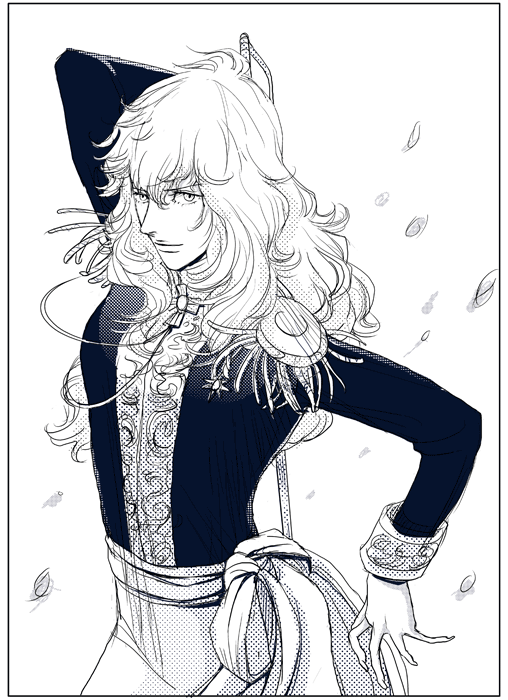
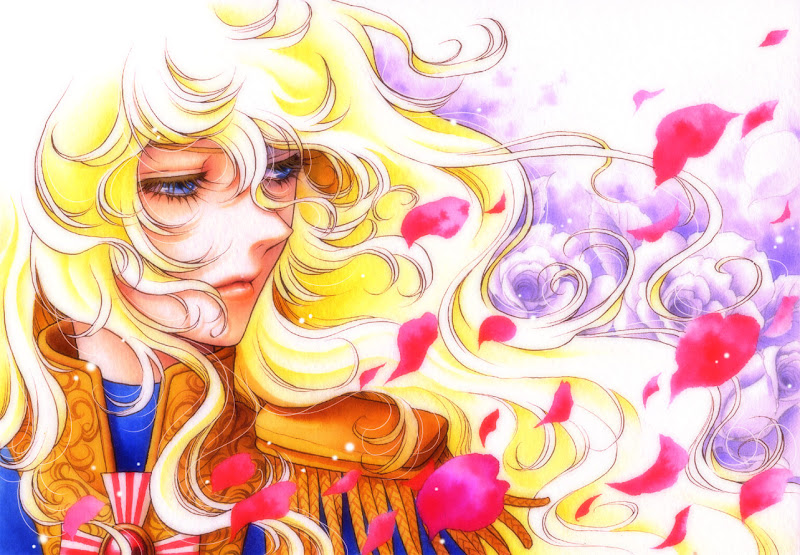
Just to show how excited I am for this, here's some Rose of Versailles fan art. (Source links below each pic.)

X
 X
X
X
Oscar-sama~ XD
X
The fan art above is cuter than a basket full of puppies.
Another cute (if kind of depressing XD) fan art.  
X
I like Oscar and Andre together, but Oscar looks SO good with other women also. 
(Antoinette does prefer Oscar's company over her husband's. ;D )
X
X
X
X

Soooo happy this was licensed. I didn't remotely expect it.

Update from Okazu:
Viki.com is premiering the opening episode at New York Comic-Com on October 13, followed by a Q&A session with Prof. Susan Napier. (I've already spoken with Prof. Napier and asked her a few questions written by myself, Katherine H. and Erin S. I'll hope that she'll have time to answer a few of them for us.)
Sounds like a fun event! I'm not attending New York Comic-Con, but I am interested in Prof. Napier's answers to my, Erin, and Erica's questions, should she have time to answer them.

Tuesday, September 11, 2012

We're getting meta: Female Yuri Fans in Anime and Manga

On Skype this past week, I attended a panel on sexism in anime and anime fandom by Patrick and Lauren that spawned some interesting discussion of how female otaku are portrayed in anime- predominantly in an objectified or male-otaku-wish-fulfilling way, even though there are exceptions like most of Kuragehime's cast, Hyouka's Mayaka and Sasameki Koto's Aoi. (Heads up, Lauren and Patrick recorded the sexism in anime and anime fandom panel they held at Otakon and posted it here.) Hence my idea for this post, going character by character.

Ritsuko in "Where the White Flowers Bloom" in Sakuraike's Hanakotoba doujinshi (publication date circa 2004, but I'm not sure exactly when) and later republished in English in Yuri Monogatari 5:
"Where the White Flowers Bloom" is a comedy one-shot about a yuri doujinshi circle composed of two friends- a straight girl named Kotomi, who attends a coed high school, and a lesbian named Ritsuko, who attends an all-girls' high school and has a cute girlfriend named Miyuki. There is no angst here- Ritsuko and Miyuki are completely comfortable with themselves and quite happy together. Amusingly, Kotomi's little sister discovers Kotomi and Ritsuko's doujinshi and tearfully tells Kotomi that she'll support her and Ritsuko as a couple no matter what hardships they go through, not listening when Kotomi tries to explain that she's mistaken.

This one shot was originally published as a doujinshi by Sakuraike, a yuri circle known for their sweet, realistic take on high school romance. It's cute, it's funny, and it's frank about its characters' sexuality without objectifying them.

Kannazuki no Miko's Himeko:
I'm counting this drama CD (released in 2004 also) here because it contributes to the KnM anime's canon.

One of the many ineffective villains in the KnM anime is Reiko-sensei, a manga artist. One of KnM's two protagonists, Himeko, is a fan of Reiko-sensei's manga. In a scene from the drama CD that I would love to have seen animated, Himeko giddily attends a book-signing by Reiko-sensei and tries to explain why she loves Sensei's manga to Chikane. (For the two people reading this who don't know, Chikane is in love with Himeko, but thinks her love is hopeless at the point at which the CD takes place.) Chikane is suddenly very interested in Himeko's manga when Himeko describes the manga's heroine, Asuka, confessing her love to a princess. After Himeko acts out Asuka's love confession, a secretly giddy Chikane apologetically says that she had something else on her mind and didn't catch what Himeko said, so could she repeat it? Himeko does because she's glad Chikane is now interested in the manga. Oh guileless, naïve Himeko.

Nothing in this drama CD contradicts the anime's canon, but the overall thing feels more humorously self-aware than the anime, so it makes sense that, in it, Himeko's fannishness over Reiko-sensei's manga turns out to be fannishness over a yuri couple in said manga. It doesn't feel objectifying at all, just cute.

Yurina in "Hana no Yurina Gumi" in ES ~ Eternal Sisters anthology 2, and later Yuri Hime S issue 3:
Presenting the earliest example I've found of the cute-girls-slashing-their-friends trend in moe, from the ES anthology that came out in 2005. (See also: Hiyori in Lucky Star, Mugi in K-ON!, and Chitose in Yuru Yuri. I'm not doing a write-up on Chitose in this post because as much as she slashes Yuru Yuri's other characters, she isn't actually portrayed as someone who reads or watches yuri. I'd bet a million dollars she does, though.)

Yurina attends your classic yuri all-girls' school, and she makes a pest of herself by seeing every interaction between her classmates as gay and trying to get them to realize that they're experiencing, doki doki, forbidden love. She writes yuri doujin novels based on her "pairings."

Like every other moe girl slashing her friends in this post, Yurina's behavior is meant to be identified with by male yuri fans rather than female yuri fans- most evident in how she fetishizes lesbian relationships being "forbidden", which I've only seen straight guys do since the idea of gay relationships as taboo simply for being gay is distressing to the people who actually have them.

Unlike the other characters on this list who friend-slash, on the plus side, Yurina gets a love interest (who acts as a tsukkomi foil to her behavior.) But on the worse-than-average-for-her-character-type side, there's the "Yay, forbidden love!" thing. The best thing about this one-shot is its title, which parodies the title of a classic yuri-ish shoujo gang girl manga called Hana no Asuka Gumi.

Girl Friends's Tamamin:
In late 2006 (yeah, I can't believe it was that long ago either), Morinaga Milk's Girl Friends started running in Comic High! One of the closest friends of Girl Friends' central couple, Mari and Akko, is Tamamin, the resident otaku and flaming weirdo.

She cosplays! She's in the school manga club! She brings doujinshi to school! In fact, when she bumps into Mari in the school restroom, she drops her smutty Revolutionary Pretty Girl Marriage doujinshi, which Mari unwittingly reads and flips out over. (Partly in a "What the hell did you bring to school" way and partly in a "*light bulb goes off* Is this what I want to do with the girl I like?" way, thus joining the ranks of teens who have explored their sexuality through manga smut.) As with all of Tamamin's otaku moments, it's played as a comedic moment to lighten Girl Friends' angst. I think Morinaga just wanted to reference her own prolific yuri doujinshi drawing (and probably collecting), which has included Utena and Sailor Moon yuri slash.

Some of Tamamin's cosplay choices do pander to Comic High!'s seinen audience, like the cosplay Ohno does in Genshiken, but Girl Friends does a good job of not making it feel male gazey. Kind of like how Kaichou ha Maid-sama avoids making its scads of maid cosplay feel servicey- although in Maid-sama's case, because it's shoujo. (Tangent: If someone finds Tamamin's cosplay more problematic than I do, their opinion is totally valid. I don't want some defensive fanboy linking here to be like "See! A girl wrote this! Tamamin's cosplay isn't male gazey at all!" to someone who thinks otherwise. If a woman says she finds a story's depiction or treatment of a female character sexist or icky or problematic in some way and you're a dude who disagrees, step down. You'll step into condescending jackass territory otherwise. Or framed more broadly, if you enjoy privilege in any particular area and someone who has less privilege than you in that area finds a portrayal of a character in their less-privileged-than-you group problematic as a depiction of people in that less privileged group, it isn't your place to argue that it isn't problematic.) I am, admittedly, biased by the fact that I like Girl Friends as a whole and I like Tamamin, shameless nerd that she is.

Tamamin shares her nerdy interests with a group of otaku girls, which is quite nice to see. Interestingly, she's the only conventionally pretty one. The other otaku in Girl Friends, including a couple otaku guys who attend a mixer Tamamin attends, fit the gawky, not-caring-much-about-their-looks otaku stereotype. In the afterword to Girl Friends volume 1, Morinaga depicts herself and her friends in high school as plain and nerdy/not mingling with the Beautiful People- so her depiction of Tamamin's otaku group feels like she's poking fun at herself in a way. Tamamin's closest friend, ironically, is Sugi, a more image-conscious girl who loves Tamamin as a friend despite her otaku hobbies.

Kyoshiro to Towa no Sora's Kozue:
In the winter 2007 anime season, we got Kyoshiro to Towa no Sora, Kaishaku's Tsubasa Chronicle-esque mish-mash of series they'd done, including expies of Kannazuki no Miko's Chikane and Himeko, named Kaon and Himiko. Like KnM's Himeko, KyoSora's protagonist Kuu has a chummy, tomboyish roommate who teases her about her love life, named Kozue. When Kuu sees Kaon and Himiko kiss in episode 2, with sparkles around them and everything, she's like "Doki doki! Oh my! Two girls kissing, just like in the manga Kozue owns!" It is but a fleeting comment, but it counts. It's also one of KyoSora's few intentionally funny moments. KyoSora has plenty of service, but none involving Kozue, for what little she appears.


Lucky Star's Hiyori- and Konata?:
Hiyori is a fan of BL and yuri. She guiltily draws yuri doujinshi based on two of her friends who, blessedly for her, are too naïve to catch on. Hiyori has some funny moments (my favorite being the one in which she trips and twists around mid-air to save her drawing hand from being injured) and like every other otaku character in Lucky Star, is meant to parody how otaku practice their hobby and relate to non-otaku.

I'm sure the Konata x Kagami fans drew all sorts of inferences from Konata's geeking out over Maria-sama ga Miteru and watching Strawberry Panic! in episode 7. She could count, but she isn't as definite as Hiyori.

Lucky Star's entire premise (the daily lives of moe otaku girls) is service. And as with Tamamin's cosplay, it has elements that could be read as what we more commonly think of as service for people who really want it to be there. But like pretty much everything by Kyoto Animation, Lucky Star does a good job of avoiding feeling male gazey. I've only read a smidgen of the manga, so I can't comment on it. A lot of women like the Lucky Star anime, myself included, but I get that, even though I and other female anime fans identify with some of its characters' behavior, the female otaku characters in it are meant to, overall, be identified with more by male otaku than female otaku.

K-ON!'s Mugi: 
So basically, Mugi's as gay as a rainbow banner festooned with lilies at a pride parade.

She slashes her friends, which is obviously an unrealistic meta gag (I've explained why I don't like it before), but she's also the first one in her group to decide to go to a women's college. (<- Said with a wink and a nudge, y'all. I know there are other great reasons for attending women's colleges. But it's Mugi, so... ^_^ ) There's also her brief thing for Sawako-sensei in the anime.

After Mugi graduates, her kouhai Sumire (in the original K-ON! manga's high school sequel) confirms that Mugi has read her share of yuri. (I'll assume anime-Mugi has done it too, because I can.) Once again, just a one-time reference to the yuri fandom of the character in question, but still nice to see it mentioned- especially for a character who is already pretty gay.

Sasameki Koto's Aoi:
Sasameki Koto's Aoi, "Where the White Flowers Bloom"'s Ritsuko, and Hanjuku Joshi and Ruruiiro no Yume's Chie are the only characters in this post whose yuri fandom isn't A) only referenced once/obscurely or B) at all meant to make them act like your stereotypical otaku guy in a cute girl suit. Like Ritsuko and Chie, Aoi isn't a sex object at all either.

Aoi is a yuri fangirl (in love with a series of Maria-sama ga Miteru-esque shoujo light novels written under a female pseudonym by the brother of SK's protagonist's love interest, Ushio- try keeping that straight) who crushes on SK's protagonist Sumi after Sumi accidentally gives Aoi the impression that she likes the same novels. Thus, Aoi ropes Sumi into helping her publish and sell a doujin novel for a yuri event aimed at female yuri fans. Aoi's fan behavior is over-the-top when we first meet her, like a lot of otaku characters, but SK gives us a thoughtful reason for that. (Besides her age and inherent awkwardness.) None of the other girls she ever knew were into yuri, and they acted like she was "forcing [her] interests on [them]" when she acted the same way about yuri that they did about BL. So Aoi's really, really excited about having a friend (Sumi) who she thinks not only doesn't mind her interests, but shares them.

Aoi buys into some problematic, Class S literature-esque assumptions about lesbian relationships, but Sasameki Koto makes the point that that aspect of Aoi's fandom is ridiculous and deconstructs it while otherwise portraying her fandom well- as an outlet for her own gayness. I want to point out that, while Class S lit and the Class S feminist movement that spawned it have their problematic aspects, yuri fandom and feminism in Japan owe them a considerable debt, as explained here. Not trying to sugarcoat the problematic side of Class S, but I don't want to throw the baby out with the bath water either. Which I don't think SK does, given the positive aspects of its portrayal of Aoi's fandom for those novels.

Anyway, Aoi doesn't get a love interest before graduating high school, but she does become more comfortable in her own skin. See: Her befriending Sumi's out lesbian friends Tomoe and Miyako, who provoked some homophobic blustering from her when she first interacted with them.

Maria Holic's Kanako:
Ech, I have to include Maria Holic, don't I. I prefer writing about titles that haven't made me want to taser myself unconscious, but yeah. Kanako digs girls and yuri and attends her dead mother's all-girls' high school alma mater to find a girlfriend. That premise has potential to be charming, but MH's execution of it sucks. Rather than rehash what's wrong with the show, I'll just point you to my old review of it. Kanako is another example of a yuri fangirl character whose behavior is meant to resemble what otaku men stereotypically behave like rather than otaku women, but unlike, say, Mugi and Hiyori, I don't know a single woman who is a fan of the series she's in. I sat through MH's first season, didn't bother with its second, and haven't tried the MH manga.


Hanjuku Joshi and Ruriiro no Yume's Chie:
A lot of Morishima Akiko's fans (*pauses to leave fresh incense and flowers at our collective shrine to her*) are familiar with her "YurixYuri Observation Diary"- a funny series of short autobiographical manga she used to draw for Comic Yuri Hime in which she draws a parody version of herself acting like a mega-fangirl in various situations. It's hard for me not to think of them when I read Chie's story ("Soft-Boiled Fujoshi") in Ruriiro no Yume.

In Hanjuku Joshi, Chie's a side character. Chie's little sister Chitose tells her about her relationship drama before asking to borrow some of Chie's yuri manga. (Chie's also a huge BL fan, so she has a sizeable stash of that genre too.) Having far less experience with real relationships than fictional ones, she pretty much fails at giving Chitose advice.

But then! In Morishima Akiko's Ruriiro no Yume one-shot collection, Chie gets her own story.

In "Soft-Boiled Fujoshi", Chie attends Chitose's school culture festival (where Hanjuku Joshi fans get to see Chitose being lovey-dovey with her girlfriend Yae) and meets a cute girl named Yuria, who offers to show her around. Chie feels like she set off an "event flag" and thinks that everything is happening so conveniently, she's probably being delusional. Turns out Yuria recognized Chie as her favorite doujinshi author and is as big of an otaku as Chie is. Chie eventually finds that what she's feeling for Yuria isn't moe but, gasp, real love, and realizes that love is better than moe. Sayuri-hime volume 4 includes a cute, brief one-shot about Chie and Yuria working on a doujinshi for Winter Comiket.

So yeah, obviously I like this example. It's funny, it doesn't treat Chie and Yuria like sex objects or male wish fulfillment vehicles, and Chie's the only character on this list whose love interest digs anime and manga also, making for some charmingly nerdy interaction between them. I also quite like that Chie's surprise at her feelings for Yuria aren't caused by Yuria being a girl, but by her being that unused to non-fictional relationships. While some of her behavior is over-the-top (including shipping some random girls from a distance), she doesn't feel like an avatar for male yuri fans- just a weird girl who likes another weird girl who likes her back. I can get behind that.

Saturday, September 1, 2012

An Idiot's Guide to Shinjuku Nichoume

I recently realized that my hard won first-hand knowledge of the lesbian scene in Tokyo- gleaned when I stayed in Tokyo for two months last summer- might be appreciated by folks looking to explore it. So here are some notes.

To get to Nichoume:

To the west of Shinjuku station, you have the business district- your classic concrete jungle of skyscrapers honeycombed with offices. To its east, you have the shopping and nightlife area. (Including an Animate!) I worked as an intern on the west side, and first visited Shinjuku Nichoume after a middle-aged male co-worker warned me that I should avoid that area. Thank you for the reminder, good sir. ^_^

Exit the east side of the station and keep walking until you start seeing bars full of men only and shops filled with images of buff, half-naked men. Why did I not mention bars full of women? Most of the businesses in the area- including bars at the ground level (a lot of bars in Tokyo are on higher stories in buildings, requiring you to look up to see the signs for them), are aimed at the dudes.

Want a shop aimed more at queer ladies? (I'll get to bars and events.) Go to the Love Piece Club- a.k.a. the place that produced and sells the Plica-chan movie- which is in a different area of Tokyo. I visited it once. It's a nice, if very pink, place, with an interesting bian manga selection towards the back- mostly tankoubon by Takeuchi Sachiko
and issues of Carmilla, a lesbian magazine that made me wonder who the hell buys it.
Love Piece Club's address:
文京区本郷7-2-2 本郷ビル2F
Directions to LPC (in English!) found here.

Bring a map! Ideally ask a business owner or an officer at a police box for directions, since they're more likely to know the area well than a random passerby. Obviously, you should make it easier for the people you're interacting with by learning basic conversational Japanese and how to ask for directions. Don't make your server at the restaurant you dine at cry on the inside from having to pretend you deserve a cookie for knowing "Konbanwa" and "Arigatou."

My guidebook (Frommer's) didn't remotely list every lesbian bar- just some popular/especially foreigner-friendly ones. The night before I left Tokyo (where I got a drink at a Nichoume bar to wind down and rest my feet after having spent the day visiting a maid café and buying doujinshi with a friend, and going around Tokyo by train to see certain sites one last time), I was given a list of all of the lesbian bars in Nichoume and their addresses by someone who works there, but I...uh, didn't find it where I thought it would be. (With a couple event flyers I've kept.) But I know there are a lot. ^_^; I wouldn't post it here anyway, since I assume that at least some of those bars may not want to be that easily found.

This past year, the popular Motel #203 bar changed its name to Bar Gold Finger and moved to a shagadelic-looking new ground-level location. I assume it’s still a good bar.
Photos not mine, from Bar Gold Finger's website. (CLICK THE LINK. That amazing music.)

Bar Gold Finger's address:
新宿区新宿2-12-11林ビル1F
Click here for a map showing how to get there.

Be prepared to answer how you found out about whichever bar you're visiting. The super-nice bar owner at Kinswomyn (Nichoume's most famous, established bar) seemed to get a kick out of seeing the description of her bar in my guidebook.

But god damn, Kinswomyn. You're a lovely bar, but you don't make it easy for me to find recent pics that show that. (Used interior ones only, since there are no exterior pics, and exterior pics wouldn't work anyway because the entrance is just a door in a hallway.) I gleaned a few from Kinswomyn's Twitter account, found here, here and here.
I included the third pic because of the character I spotted in its background.

Kinswomyn's address:
新宿区新宿 2-15-10 第 1 天香ビル 3F

You'll have to work harder to find this one. From the direction of Shinjuku-doori, walk up Naka-doori. Down one of the first few roads to your right, you'll find it in a building to your left. When I visited it, its outside sign was faded. Hopefully they've replaced it. If you get there before the crowd arrives at 9:00, you may pass by its door without realizing you just did and wondering if you got the address wrong, before asking someone else in the building where Kinswomyn is, being pointed back there, and staring like an idiot before opening it. ^_^ Good luck! In all seriousness, just bring a map and the address and say "Sumimasen, kono basho o sagashiteimasu" ("I am looking for this place") to someone. (Maybe more than one someone.)

There's an all-women's party every week in the area, and the lesbian bar owners are big on promoting each other's events, so when you visit one, you're likely to get a recommendation or flyer for the next party coming up. Best thing about the event flyers- they have maps! If you go to a Nichoume party, be prepared to cough up a 2,000 to 3,000 yen cover.

The best place to find flyers for all of the upcoming lgbtq events in the area is the CoCoLo Café. CoCoLo Café accepts credit cards, but the bars don't. The Advocates Café does, but only if you charge 5,000 yen or more at once. The Advocates Café is really a bar that opens and closes early, renowned for being a good place to get word-of-mouth event/club recommendations. Like CoCoLo, it is aimed at all genders and sexualities, but unlike CoCoLo, men make up the vast majority of its clientele- including quite a few non-Japanese folks.
 Don't own these photos, screencapped them from Advocates's front page.

Advocates' address:
新宿区新宿2-18-1 第7天香ビル1F
You don't need an address or a map. You can't walk down Naka-doori and miss Advocates.

Ditto, from CoCoLo's website.

The food at CoCoLo is decent, and I had a dessert drink (a matchacchino) that I quite liked. But it's especially nice for its flyers and the ability for gay couples to be lovey-dovey at a restaurant without worrying about getting side-eyed. Or getting awkwardly hit on like I was, before ditching the woman in question with the other girl she hit on at the same time (really) because she creeped us both out and we got along and were sick of being politely tolerant while craning our necks around her to speak to each other more. CoCoLo also stays open until 7:00 in the morning on Friday and Saturday nights (midnight on Sundays and Mondays through Thursdays), so it's a good place to get a slice of cake or coffee or something late at night. Here's a video tour of the café.

CoCoLo's address:
新宿区新宿2-14-6 第1早川屋ビル1階
Map (in Japanese) found here. It's easy to spot from Naka-doori.

The trains in Tokyo stop some time between 12:00 and 1:000 in the morning, so if your home base isn't in the area and you don't catch the last train (check the train station schedule if you want to catch it, or the first train at 6:00-ish in the morning) and you really don't want to make yourself stay awake until the morning train, your best/cheapest bet is one of the internet/manga cafés. Just start walking in the nightlife area of east Shinjuku, and you're bound to see one. See here for more details on what internet/manga cafés (and other lodgings) are like. Unlike the author of that article, I think internet/manga cafés are the most miserable places in the world to sleep (you're basically paying for a booth with a computer, a pleather pad covering the ground, and a cracked beanbag chair, with nothing to block out the light), but if you're dead tired it'll do. Sometimes the booths with the pads are sold out, so you have the option of buying one sans a pad.

Anecdote: I once locked myself out of the sharehouse I was staying in because I'd left my house key in my other bag. My housemates weren't home, and I  couldn't contact them. I tried to break in- checking the doors and windows and trying lock-picking with hairpins for the first time. My housemates weren't back by the time the last train to downtown Ikebukuro (I was in a residential area outside of it) was about to arrive, so I took the train downtown to find an internet café. At the first place I visited, the guy at the counter said they only had padless booths left. I was like "lol No" at the idea of paying to sleep on a floor, and left to check out the other internet café in the area. Their credit card machine was wonky, so they could only accept cash, but I was too low on it. (Spent the day in Shibuya's shopping area- which, incidentally, has a wonderful Mandarake.) Long story short, I went back to that first internet café, and the guy at the counter was like "lol No" when I asked if they still had any booths available. Sleep-need aside, my nerves were frayed by the pick up artists hanging around outside (there because of the love hotels downtown) whose presence dominated the area (due to there being a lot less normal people out at that hour) and who were, like, ten times more persistent and than they are during the day. I normally don't curse out people, even creepers (my tactic usually being to ignore them), but I snapped and (sensibly, in English) told one of them to f*** off. I finally walked back to the sharehouse...and miracle of miracles, there was a light in one of the rooms! The front door wasn't loud enough when I knocked, so I sensibly (and cathartically) kicked the door until I hear my housemate coming.

Uh...the point is that there's always something worse than sleeping on a pad and misplacing your house key can screw up your night. And here's another good article on cheap lodgings.

Last but not least, some Twitter accounts of interest for their event announcement tweets. More convenient than getting a flyer, although you can get a cheaper cover at some events if you bring a flyer.

Bar Gold Finger (which holds a Gold Finger party on the third Saturday of each month)
Dyke Weekend 2012
Kinswomyn
La Niña (The account for the La Niña parties held on the second Saturday of each month.)
Stonewall AJET Japan (An English-language Twitter account for a new LGBTQ community group aimed primarily at English-speaking expats and visitors in Japan.)
Tokyo Wrestling

If you have other suggestions for the list, let me know!

So...uh, yeah. That's what I've got. If you visit Shinjuku Nichoume (or any other nightlife area where my ramblings may be relevant), godspeed. *salute* I hope this post proves useful.

Wednesday, August 29, 2012

Manga Review: Wandering Son volume 2


First off, I recommend anyone reading this volume to read the "Transgendered in Japan" essay by Wandering Son's translator, Matt Thorn, before reading the rest of the volume. You'll have a better appreciation of the context for some scenes in this volume's final arc if you have the knowledge imparted by one of the topics touched on by the essay first.

And it's a great essay all-around, explaining what it takes to legally change one's gender in Japan, societal views of trans people (framed within the context of how the lgbt community as a whole is perceived in Japan), and the roles/portrayals trans people get in the media. There's some interesting, if unsurprising, discussion of how views/portrayals of trans women and gay men are interrelated. Thorn also discusses manga portrayals, a couple wonderful lgbt celebrities (a trans comedienne who publicly called out Governor Ishihara for some homophobic remarks and a lesbian fashion model who blogs about lgbt issues), and the inaccuracies of Western views of Japanese views about lgbt people. Really a fantastic essay.

Anyway, onto the main review~

Nitori, Takatsuki, Chiba, and Sasa start the sixth grade, but Chiba gets placed in a different class. Nitori's new teacher assigns the kids to write an essay about their dream. Nitori's dream is to grow up to be a beautiful woman, but that can't exactly be turned in. Maho, bless her blunt sincerity, suggests BSing the essay, but Nitori doesn't write down any dream at all.

Nitori and Takatsuki start an exchange diary, and worry about including Chiba and Sasa (meaning they'd have to out themselves to Sasa), but Chiba and Sasa start their own exchange diary, so phew. Nitori and Takatsuki expect Sasa to be supportive but, understandably, coming out to her (especially when they don't feel ready) would still be stressful.

And Yukiiiiii. I love that Shimura Takako includes older role models for her protagonists in this series and Aoi Hana. Yuki, who seems suspect at first, when we don't really know her, turns out to be one of the best things to happen to Nitori and Takatsuki. I also like how the story shows that Nitori and Takatsuki's friendship with Yuki is good for her too. She didn't know anyone else who was transsexual growing up, so it's cathartic for her to see them as friends and make things easier for them.

Finally, the field trip arc. A boy classmate targets Nitori for bullying, causing Chiba to (understandably) lose her temper. And, of course, the teacher only notices what she did. Still, Chiba tells Nitori that they're "bosom buddies" (I love the Anne of Green Gables references in this volume; it was one of my favorite books as a kid because I loved Anne), Nitori and Takatsuki run into Yuki and her boyfriend Shii-chan on vacation, and Nitori works up the courage to tell off the bully. (Yay Nitori!!)

Besides the essay, extras includes a Pronunciation Guide and an Honorifics Guide. The translation is still excellent. Just one quibble- I don't mind "Sayonara" being left untranslated at one point, but it's a bit weird that Nitori's teacher saying "H-hai" to Yuki isn't translated as "Y-yes."

There is also an Afterword in comic form by Shimura Takako. No matter how self-deprecatingly she presents herself, I will still turn to jelly if I ever meet her.

Story: A
Art: A-
Overall: A

Monday, August 20, 2012

Lesbian Movies: Part Three

Presentiiiiing my third multiple-movie post! It's rather...longer than my previous multi-movie posts, found here and here.

If you want to see me write about a lesbian movie you like or have heard is good (please don't recommend, say, Claire of the Moon), let me know!

Blue Gate Crossing (藍色大門):
Thanks to Day and Diabolical Shih Tzu for putting this on my radar!

Meng is in love with her best friend Lin, who has her sights locked on Zhang, a guy at their school. Lin hasn't spoken to Zhang, but she has amassed a collection of things belonging to him (pencils, a basketball, etc) that she's swiped. She even thinks writing Zhang's name over and over in a notebook until her pen runs out of ink will make him like her. Ah, young love.

Lin drags Meng to their school at night to secretly watch Zhang swim in the school pool. Sick of Lin's "OMG I like this guy but instead of telling him I'm going to keep talking to you about how I can't tell him my feelings," Meng shouts to Zhang that her friend Lin wants to tell him something. Meng tells Zhang that her friend Lin likes him, but can't introduce him to Lin since Lin ran away as soon as Meng started shouting. So Zhang thinks that there is no Lin and Meng was confessing her feelings to him in a roundabout way. Since Zhang has no experience dating, he's bowled over by the idea of Meng liking him even though he has no idea who she is and starts trying to woo her.

Lin continues to be a dumbass, sending Zhang a love letter signed with Meng's name- a misunderstanding Meng clears up, although it doesn't prevent her from being bullied a little by another girl who likes Zhang. Lin tries to make herself like Zhang, and kisses him to see if she can like guys, but nope, it's about as enjoyable as pecking her great aunt. She confesses her feelings to Lin by kissing her and waiting to see what she does... and Lin completely ignores her after that. Not in a "Holy shit, that was unexpected and awkward. I need to process that my best friend just kissed me" way, but an "Ewwww,  you're gay? Keep your gay germs away from me" way. Poor Meng. Lin was a shitty friend, though (we don't see Lin do anything for Meng or ask her how she is), so not like she would have been much of a girlfriend. And Zhang, who does meet Lin, doesn't like her and ignores her too.

Lin = Slappable, although I could relate to her doing stupid shit while pining over someone in high school. (Although not on the level of, say, taping a photocopy of my crush's face over someone else's and pretending I was spending time with my crush instead of the person under the photocopy.)

Zhang = My feelings about him are more mixed. After Lin rejects Meng, Meng gets that it's a lost cause. Even after Meng rejects Zhang- to the extent of admitting that she isn't into guys- Zhang becomes obnoxious, in continuing to let Meng know that he thinks he'll have a chance at some point. On the one hand, he is a good friend to Meng at times, but on the other hand, move on dude. After Lin rejects Meng, Zhang seems to be the only person interested in being friends with Meng, but his obvious hope that she'll somehow like him back even though she has utterly rejected him as a lover kind of taints that. I wouldn't mind him still being friends with her even though he likes her- but only if he doesn't expect her to like him back and can really settle for the possibility of friendship only, knowing that it was just a crush on his part and he'll get over her eventually. I know he's just a high schooler, but some of his behavior struck a nerve because some men don't take women seriously when they decline their interest on the basis of being gay, and can be really obnoxious (sometimes even dangerous) about it. (Ignoring someone's rejection is obnoxious regardless of their reason for rejection, but it takes a special kind of assholery to be like "Hurr durr, you say you aren't interested in guys, but all I heard was blah blah blah.")

Meng = Meng, sweetie, the internet is your friend. Find likeminded people- and fiction, shows, movies- to tide you over until you can meet other women who like women (who you know like women- chances are you already have met some but couldn't tell, just like people can't tell when they meet you) in real life. Things are getting better on a broader scale, and things will get better for you. You might think "Shit, that's easy to say," but I was in similar shoes once, and I swear to god it's true.

Hugs,
Katherine

Trailer here.

Desert Hearts: 
Desert Hearts (1985) is the first lesbian movie to give its leads a happy ending since Mädchen in Uniform came out in Germany in 1931. Even then, Mädchen in Uniform suffered from having its happy ending edited away- and then being banned altogether- by the Third Reich, although it evaded being destroyed altogether. But yeah, can you imagine? Before Desert Hearts came out, your only option for a happy lesbian movie was to dig up the original version of a movie from 1931. I haven't seen Mädchen in Uniform yet.

Desert Hearts is about Vivian, an English lit professor who travels to Nevada to get the six week residency she needs to divorce her husband. There, quiet, buttoned up Vivian meets a free-spirited sculptor named Cay. Vivian gets her groove back with Cay, gets her divorce finalized, and...how will she and Cay deal with her impending return to New York? This movie leaves that issue open-ended, but makes it clear they'll work things out.

A popular lesbian romance story type is that of the protagonist who thinks she's only interested in guys- usually married to/engaged to/dating a man who she might like/love as a close friend/be attracted to, but isn't in love with- and is dissatisfied with her life without knowing why, until she meets a hot, charismatic lesbian who's comfortable in her own skin and amazing in bed, and the protagonist is bowled over by her electrifying attraction to the lesbian, which turns out to be love. Obviously there are variations- like in Onozucca Kahori's Love Slave (whose protagonist Ureha already knew she liked women, but stopped repressing it after meeting Sawori- and eventually broke up with Sawori), or Sakurazawa Erica's Love Vibes (the only example of this story type I can think of in which the protagonist's love interest is bisexual instead of gay; I guess you could kind of count Kissing Jessica Stein, even though it varies a lot more from the story type I outlined). Imagine Me & You and Tsukumo Mutsumi's Moonlight Flowers are two (quite good, especially the wonderfulness that is Moonlight Flowers) examples of this story type played completely straight. But anyway, Desert Hearts is the earliest film example of this story formula I've found.

How was the movie itself? It was sweet. The story type this movie follows is one that I've already seen in lesbian movies...a lot. (Not so much in lesbian fiction, where there's more variety.) I'm kind of tired of it, actually. lol Burn out from encountering so many examples of this story type aside...even though I've enjoyed several examples of it, when looking for lesbian romance in different media- esp when it comes to adult protagonists- I especially crave characters who like women and know it, and already have coming out to themselves of the way. Since, you know, life doesn't halt after you come out.

I had to remind myself that this movie was the earliest example of its story type on film (the novel it adapts, Jane Rule's Desert of the Heart, was published in 1964) and came out before its scenario was a lesbian romance standard. But again, it was sweet, and it was well-acted. Helen Shaver (Vivian) and Patricia Charbonneau (Cay) have great chemistry together, which makes the movie work for me even though I'm kind of sick of its story type right now.

Trailer here.

I Can't Think Straight:
Tala is engaged for the fifth time and Leyla has a boyfriend. Tala knows she likes women but has decided it's easier to stay in the closet. She comes from one of the richest, most prominent families in Jordan, so extra pressure there to marry the "right" kind of person.

Leyla has had a sense of why she has never been into any of the men she's dated (or...men, period) for a long time, but, like so many in denial, came up with loads of irrational rationalizations to convince herself she isn't gay. Tala and Leyla meet and fall in love. Even though Leyla started as the one in denial (and Tala as the confident outspokenness to Leyla's hesitation and reserve), she comes out to her family and friends much more quickly than Tala. After chickening out of their relationship, Tala breaks off her engagement- but not before Leyla starts dating another woman. How will Tala win back Leyla?

Another cute movie- the kind you watch for something feel-good or snuggling up with someone for a date night. Also recced for that:
Better Than Chocolate
But I'm A Cheerleader     Best choice on this list for lols.
D.E.B.S.    Aside from the hot lesbian villain, I thought it was kind meh, but a lot of people like it.
Desert Hearts
Imagine Me & You 
Leading Ladies 
Love My Life
Loving Annabelle     If you/you and your s.o. A) watch the extended ending and B) don't mind that this movie's basically guilty pleasure romantic fantasy fluff for anyone who's gone weak-kneed for a teacher or professor, even though they (should) know that student-teacher affairs are a shitty idea in real life. "What about Bloomington? Have you seen it?" you might ask. I have. It is one of the most boring, irritating movies I've sat through. I haven't seen Loving Annabelle in years, but I remember it definitely being more watchable than Bloomington.
Nina's Heavenly Delights
Room In Rome
Saving Face
Yes or No   Why isn't this licensed in English yet?

I haven't seen Show Me Love or Kiss Me, but they sound like they count.

I liked I Can't Think Straight as a sweet, happy-ever-after kind of movie, even though its "Two women realize they like each other, one or both them comes out after a lot of soul-searching, yay they can be together" plot isn't anything new for lesbian movies and the getting-together-in-an-affair-way trope has been done to death. (Man, this is my most jaded lesbian movie post, isn't it.)

Tala and Leyla's coming out make up the bulk of this movie, so there's a lot of coming out angst, but it's balanced out by the lovey-dovey bits (mmm, that dance scene- and its aftermath; the book signing scene is another favorite), the sprinkles of humor throughout the movie (tied between Leyla's sister's assessment of Leyla's book and CD collection and Ali's reaction to Tala's reaction to the news that Leyla came out), and the all-around happy resolution. Leyla's dad's reaction to Leyla's coming out is great, and Tala's dad doesn't seem bothered by it. Tala's mom reacts badly, but the movie portrays her as a snobby-rich-lady-who's-clueless-about-everything caricature, so it's hard to take her too seriously, even when she lashes out at Tala. Leyla's mom also reacts badly, but supports Leyla and Tala by the end.

Trailer here.

Nina's Heavenly Delights:
Yessss, a lesbian foodie movie. ^__^

Man, this is a really cute movie. It reminds me of Better Than Chocolate in how it's really cheesy, but in an endearing way. 

Nina Shah returns to her family's home in Glasgow for her father's funeral, after having been estranged from them for three years. Her family runs an Indian restaurant- one of the best- and Nina was engaged three years ago to the son of another Indian restaurant-owning family. (I guess the plan was to neutralize the threat of each competing Indian restaurant, one union at a time, like those old political marriages between warring nations?) But Nina is gay and couldn't go through with it, so she left.

Nina feels horrible about not making up with her father before he died- not helped by others assholishly guilt-tripping her about it. Nobody in Glasgow knows she's gay, aside from her flamboyant friend Bobbi and his boyfriend.

Nina finds out that her father was in debt and bet half-ownership of the restaurant in the hopes of clearing it- but he lost, so the restaurant is partly owned by the family of Nina's childhood friend Lisa. Nina isn't happy about it, but she's a lot more pissed when she finds out that her mom and brother want to sell the restaurant to her smarmy ex-fiancee Sanjay's family. With Lisa's help, Nina decides to save the restaurant by winning the televised Best of the West Curry Competition, which her father won previously and hoped to win again with her.

Sparks fly between Nina and Lisa, but oh no! Lisa is engaged to Nina's brother. I want to send whoever made this movie flowers for subverting the getting-together-in-an-affair-way lesbian movie trope the way this movie does.

Nina's brother and sister have their own secrets, which they tell their mom about. Nina's mom figures out that Nina and Lisa love each other, but waits to see if Nina will come out about it on her own. The Best of the West competition finally arrives, and Sanjay tries to sabotage Nina and Lisa's relationship after the competition starts (even he can tell what's between them) so they'll lose. How will it resolve!? Dun dun dun.

So yeah, I really like this movie. I like Nina and Lisa's romance, but I also like that there's more going on in Nina's life than her romance with Lisa and coming out, and how the romantic and non-romantic themes (like family) in this movie contribute to each others' development. The lovingly shot cooking scenes made me hungry, which is a good sign for any foodie movie.

Plus, how many lesbian movies end with a Bollywood-style musical number featuring all of the characters?

Trailer here.

Pariah:
Pariah's protagonist, 17 year-old Alike, is already out to herself, but brand new in the lesbian community and still finding her sea legs in it. What I like most about this movie is its portrayal of being newly out in the lesbian community as a teen, since it reminds me of my own flailings as a shiny new lesbian at college, looking up to the older students who'd been out and about longer, and (from the point of view of relating to Alike's older friend Laura) seeing the bright-eyed gay freshmen in later years who looked to me and my fellow gay upperclasswomen as models. That kind of platonic mentor friendship is nice to see here. Pretty much anyone who came out in the lesbian community as a teen will smile knowingly at the newly-out-in-the-community aspect of this movie, but it's so well-written and acted that anyone should be able to enjoy it.

In most lesbian movies, when a character comes out to her parents, one parent is the good (supportive) parent and one parent is the bad (non-supportive) parent, but this movie complicates that dynamic. Alike's dad knows that she is gay and quietly supports her- more actively when a homophobe insults her in front of him when she isn't around and later, after she comes out to he and her mom and her mom freaks out. But his defense of his daughter isn't the only thing causing tension between he and his wife- he's having an affair. This movie also paints a warm, vivid picture of what Alike's relationship of her mom was once like (see: the leaf anecdote) in contrast to her mom's reaction, making it all the more poignant when Alike's dad tries to convince her that her mom does love her deep down. I'm actually tearing up a little remembering that scene. In a way, it's good to have a movie that deals with a homophobic parent's reaction, in all of its rawness, and shows its protagonist getting through it and still finding that coming out made her life better even though that parent has not come around (although the protagonist would love it to be otherwise), since she's living her life without lying about who she is.

Alike also gets a love interest, Bina, the feminine-looking churchgoing girl who Alike's mom encourages her to spend time with instead of butchy Laura. Long story short, Bina isn't worthy of Alike (sucks massively, but most people have to kiss some frogs before finding whoever's right for them; join the club, Alike) but, as she does after her mom's reaction, Alike is able to move forward. (To college!)

Trailer here.

The Owls:
The best thing about this movie is that it's only about an hour long. (Not counting the bonus interviews with the cast that appear at the end- and inexplicably, a few minutes in the middle- of this movie.)

I went into this movie expecting a murder mystery, but all I got was about an hour of its protagonists (two lesbian couples who used to be in a band) bitching about their mid-life crises and how much they hate each other, with a resolution to the accidental killing they covered up tacked on to the end.
I loathed every one of these characters. If I were stuck in a room with them, I would bash my head against a wall in the hopes of passing out. The only one I sympathized with at all was this movie's fifth protagonist (not shown in the picture above, which includes the woman who was accidentally killed along with the two couples), when she expressed her disbelief at how utterly obnoxious and dull the other characters are.

Shitty characterization aside (not aided by the torpid acting), the background music is as subtle as a hammer to the head and the over-zealously edited cinematography bludgeons us with the fact that this movie is supposed to be creepy and mysterious, but in a deep, indie way. Nope, not creepy, not mysterious, not interesting in the least. Thirty minutes into it, I made the window I was watching it on (via Netflix streaming) smaller so that I could pull up another window and check my email and other sites while letting this movie finish.

Trailer here.

The Ultimate Lesbian Short Film Festival:
This film collection wasn't on my radar until I saw it on Netflix streaming. It's advertised as including shorts by filmmakers from the US, Canada and Australia, but you'll see that there are only two(-ish) non-US films. (IMDB lists one as a US and Canadian film, without explaining why, so I'm not quite sure how to count it.) My rundown on each short is listed below.

"A Woman Reported" (5 minutes, US)- A surreal- and terrifying- short about a woman running away from two men who attack her (apparently because they realized she was talking to her girlfriend- or wife, can't tell- on the phone) after she gets out of her car near some woods. Lesson of the story: If you're hiding from huge, scary people, be sure to turn off your cell phone.

"Dani & Alice" (11 minutes, Canada/US)- Terrifying in its own way, about the end of a physically abusive relationship. Well done for what it's supposed to be, but obviously hard to watch.

"Frozen Smile" (8 minutes, US)- One of the most puzzling shorts in this collection. A goth teenager visits her grandpa's grave with her mom and grandma, where it turns out the headstone engraver screwed up. I'm not sure how this is a lesbian film. I guess we're supposed to read the short-haired teenager as gay...?

"Everything Good" (17 minutes, US)- A woman staying in Amsterdam (whose girlfriend or wife- again, can't tell- is back home) orders a prostitute up to her room. Funny at points, despite the guilt-making premise- but mostly meh. Despite the subject matter and copious amounts of talking about getting ready for sex, dental dams, etc, there isn't any actual graphic sex or nudity in this short. That isn't why I thought it was meh. lol I just wish some interesting character development had showed up before the very end of the movie.

"Saint Henry" (20 minutes, US)- A lesbian teen and her gay best friend half-heartedly try to car-jack a man at gun point (because her dad is in jail for car-jacking, and she thinks that if she does the same thing, she'll be sent to the men's prison where he is and be able to see him again?), but don't actually do it and decide to hide in an abandoned church until morning. The girl finds a dead man in the confessional booth and closes his eyes, lays him down on some cloth, and covers him with another cloth before she and her friend leave in the morning. Okay...

"Blow" (7 minutes, Australia)- My favorite in this collection, a cute short about a teen who has sneezing fits day after day until she gets together with her crush. Out of all the stories in this collection, this one feels the most complete.

"Transit" (4 minutes, US)- Frustratingly brief, about a woman whose eyes meet another woman's on the subway.

"Half-Laughing" (12 minutes, US)- A really sad short about a woman who goes to her parents' home for her grandpa's funeral. Her mom tries to makes her cover her butchy buzzcut with an ugly wig at the funeral, causing them to blow up at each other over why the mom is so obsessed with making her daughter not "look gay."

"Tina Paulina: Living on Hope Street" (9 minutes, US)- Unlike the other films in this collection, this is a mini-documentary, in which the director interviews a homeless woman who she somes across while looking for film subjects in Los Angeles. The interviewer does a good job making her subject comfortable enough to give us a thorough picture of who she is without holding back much, for better or worse. In the spring semester of my junior year of college, I took a "Documenting Lesbian Lives" class in which each student's final project was to do a two hour camera-recorded interview with a queer woman over 45 (focusing on her life story) and transcribe it- making me better appreciate what it takes to interview a subject on camera as well as this film's interviewer did.

"The Black Plum"(15 minutes, US)- So this ghost plants a plum outside a country house where a baby is being born. 10 or so years later, the plum is now a plum tree and the baby is now a kid who likes climbing said tree. The kid falls out of the tree, cutting and scraping herself, and the ghost pulls up in a car and asks the kid if she wants a ride. Not being aware of stranger danger, the kid gets in, and the ghost takes her to the cabin where she lives with her ghost wife. Together, they're a butch-femme pair meant to be role models for the kid. They give the kid a compass (subtle symbolism) and the ghost femme takes the kid back home. This film has its heart in the right place, but...it's so, so corny.

Calling this collection The Ultimate Lesbian Film Festival is a massive overstatement, but it has a few pieces I thought were interesting. You aren't missing much by skipping it, but it isn't bad either, and there was a good effort made for variety- thematically at least. For a collection of ten short films, it's disappointing and problematic that only one of them ("Dani & Alice," whose leads are black) stars non-white characters.

Tomboy:
Céline Sciamma has a gift for writing and directing stories about lgbtq children and teens. (Sort of the Shimura Takako of French cinema, if you will.)

A new family moves into an apartment complex, including 10 year old Laure. Laure presents as "Mickael" to the other kids in the area- joining the boys in the horseplay that they wouldn't want Laure to join if they knew Laure's sex, and befriending Lisa, a girl from the same apartment complex. Laure gets a puppy crush on Lisa and Lisa likes Laure back, and the summer vacation passes pleasantly. The only person who knows about Laure's double life is Laure's little sister, who doesn't care as long as Laure brings her along to play with the other kids. Laure's secret has to come out at some point, but I won't spoil how or what its result is.

Like Water Lilies, Tomboy is a very well-written, well-acted, heart-tugging movie that gets everything it's trying to do right. Just as Water Lilies captures the clumsy awkwardness of navigating adolescence, Tomboy captures a lot of the fun and wonder of childhood. And just as I linked to an excellent analysis of Water Lilies in my most recent lesbian movie post, I'll link to a review of Tomboy here that articulates why this movie is worth watching in more detail (without spoiling) than I have, regardless of how you read (or choose not to read) its protagonist's sexual or gender identity.

Trailer here.

Kiss Me is coming out on DVD in North America on November 6! It's already available in the UK. Jamie & Jessie Are Not Together is also available in the UK, although (ironically, since it's a US movie) it doesn't have a North American DVD date yet.

And here is the plot synopsis and trailer for Yes or No's sequel, which recently came out (hurr) in Thailand. I thought Yes or No was really cute, so I'm looking forward to its sequel!

Saturday, August 11, 2012

Anime Review: Red Garden episodes 13-22 (plus the OVA)


Red Garden's first twelve episodes are, as I said when I reviewed its first half, build up. We have established an interesting set of characters, a conflict that paints both sides in shades of gray, and a bundle of questions to be answered.

Hervé, our primary antagonist, and his best friend Emilio ping pong between helping and hindering Kate, Rachel, Rose and Claire. Hervé is only willing to help so far as his ability to save his sister Anna isn't threatened (woe be to anyone who interferes), while Emilio's love for Kate's sister Emma gives him a soft spot for Kate. And Paula, who knows much more than Kate realizes, continues to be there for Kate, helping her out of love without expecting anything in return.

But mostly, these episodes focus on our leads learning what the people on their side and the people on Hervé's side really want, and what they face if either side wins.

The original stakes (the girls either dying a violent death or making it long enough to get their old bodies back) were high enough, but these episodes top that. Skip the next few paragraphs if you don't want to read my spoilery reaction to the fate faced by our leads.

SPOILER
.
.
.
.
.

The most anxiety-inducing book I have ever read is George Orwell's Nineteen Eighty-Four. As difficult as it was to read the physical torture Winston underwent, what happened to him psychologically- everything he knew and loved being ground into nothing, his very personality being wiped out- his not even being allowed to die while still himself- ultimately unnerved me the most. To quote Winston's torturer O'Brien:
In the old days, the heretic walked to the stake still a heretic, proclaiming his heresy, exulting in it. Even the victim of the Russian purges could carry rebellion locked up in his skull as he walked down the passage waiting for the bullet. But we make the brain perfect before we blow it out. The command of the old despotisms was 'Thou shalt not.' The command of the totalitarians was 'Thou shalt.' Our command is 'Thou art.' (263)
What Kate and the others face in Red Garden obviously isn't the exact same thing- they aren't being tortured into forgetting themselves, and they're free to think what they want after their memories are expunged- but still, the implications of their fates are similar enough to draw parallels. Being forced into a situation in which you will wind up...well, not being yourself as you and your loved ones know any more, forever and ever...pretty unnerving. And that's how Red Garden's protagonists feel. But as their personal lives improve, in a sad irony, shortly before their final battle, they find comfort in something crucial.
You must stop imagining that posterity will vindicate you, Winston. Posterity will never hear of you. You will be lifted clean out of the stream of history. We shall turn you into gas and pour you into the stratosphere. Nothing will remain of you: not a name in the register, not a memory in a living brain. You will be annihilated in the past as well as the future. You will never have existed. (262)
Claire, Rose, Rachel and Kate are able to face their fate knowing that the people they love will remember them as they are...and that's good enough.

.
.
.
.
.
SPOILER

Having found peace with their fates while visiting Lise's grave, Rachel, Rose, Claire and Kate confront Hervé and his side one last time. What ultimately happens is simply tragic for one side, bittersweet for another.

And then...when the final credits starting rolling, I thought, "Wait, it's ending?" At first I wanted to see a little more wrap-up, but the "Dead Girls" OVA that follows this series kind of beat that desire out of me. lol If there were ever a perfect example of "less is more," this would be it.

The OVA, which is the length of two TV episodes, takes place centuries after the end of the TV series. Having wandered around the world, Kate and the others are back in New York, fighting crime by night as an anonymous team known as Dead Girls. They even have their own theme song. I laughed at the OVA's self-awareness when one of its characters commented that the Dead Girls don't at sing well, given the tone deaf musical numbers sung by the leads at the beginning of the RG TV series. But otherwise, I wasn't very enamored with the mood whiplash of the OVA. It was kind of fun at first in a crackfic way, but I didn't like its vision of how the characters would turn out. Rose's personality change was kind of fun (although in the scene when "Paula" went weak-kneed over her, I was very maturely like, "Bitch, stay away from my OTP"), but I wept a little on the inside at what happened to Claire. Given how long they'd been alive after the end of the series, I could understand the characters being radically different. My biggest problem with the OVA was that the leads no longer had the heart they had in the TV series. Even though they had their moments together, I missed the palpable camaraderie that Kate, Rachel, Claire and Rose developed in the TV series even though they were just as different from each other in it. The OVA's highlights were seeing the occasional glimmers of the leads' old personalities and the too few and far between moments when they clicked as friends. I'm just going to imagine that this OVA is a crackfic, and Red Garden's canon ended with the TV series.

The TV series' resolution does, as I said earlier, have its problems. Desire for a little more closure aside, I was left with some questions about the origins of the conflict that Kate and the others were roped into, as well as the nature of the island after the final battle. But even though this series didn't answer all of its questions adequately, it was solidly entertaining and had a great cast of characters. Their development was this series' greatest strength.

As for the yuri, Paula does confess her love to Kate. It's quite a lovely confession. Kate, Claire, Rachel and Rose know that Christmas is the last day before their final battle, and spend time with the people most important to them. Who does Kate choose to spend her remaining time with? Paula. We don't see Kate explicitly tell Paula that she loves her back, but based on her behavior...it isn't a stretch at all to interpret her as loving Paula back but being afraid of saying too much...not wanting to give them both more to face losing.

SPOILER
.
.
.
.
.
In my vision of the characters' post-series fates, Paula finds Kate, willing to start over from scratch and help remind her of her old life. Since Paula knows all about Kate's situation, she can...I don't know, try to find those books and find out if there's any way to give Kate and the others back their memories, or help them figure out how to become mortal again. Boom. There you go.
.
.
.
.
.
SPOILER

So, yes, even though it has its warts, Red Garden is a fun blend of creepiness and character drama, with a pleasing dash of yuri. I wouldn't re-watch the OVA, but I would re-watch the series.

Art: B+
Story (not counting the OVA): B+
Overall (ditto): B+

Wednesday, August 1, 2012

Light Novel Review: Strawberry Panic, The Complete Collection, volume 3


Last time, on Strawberry Panic: Hikari and Amane ran away after being disqualified from the Etoile competition and Nagisa, intimidated by Shizuma's old relationship with Kaori, decided to withdraw. Spica's Makoto and Lulim's Kagome are the only strong Etoile candidates left, but their prospects don't look good either. Kagome hates Makoto because Makoto made fun of her for carrying a stuffed bear.

Amane brings Hikari to her beachside mansion. They make out, and things seem peachy until Hikari says Yaya's name, effectively dumping cold water on Amane. Hikari explains what happened between her and Yaya during the Faceless Devil competition, honestly thinking that it was Yaya's way of supporting her as a friend- you know, being a lesbian. (Didn't you know? We lesbians use breast-groping as a greeting and ass-grabbing as way to say "How do you do?") Even Ms. Internalized Homophobia, Amane, knows that Hikari's being delusional. Surprisingly, she isn't angry at Yaya- but she is determined to win the Etoile competition and prove that she's a better partner for Hikari than Yaya.

Here, my shipping branches away from my Strawberry Panic anime ships. Because of Hikari's extreme stupidity, my Hikari x Yaya ship disintegrates in this novel. Yaya gets over Hikari, and I like to think that she will find someone who deserves her. Even though I never like the man-hating lesbian trope (softened in this case by the fact that this series is a knowingly dumb, tongue-in-cheek parody), I still like novel-Yaya more than novel-Amane because she is more honest and self-aware than Amane (I'll take "Yeah, I like girls and I love Hikari" over "I love Hikari, but girls liking girls is wrong...but I'm still going to date Hikari and run away with her") and says some amusingly true snarky things about her schoolmates.

Amane and Hikari return to Spica using the Miator helicopter- courtesy of Chikaru, whose mother is the Chancellor of Miator and the ultimate authority of all three schools. It's comforting to know that Chikaru will someday run Astraea Hill.

Even though this scene tries to convey how admirable and princely Amane is, it merely convinced me that Chikaru is the real heroine of this series. After pushing her mother to readmit Amane and Hikari to Spica (Chikaru's mother wants Amane to transfer to Miator instead), Chikaru explains that she decided to attend Lulim to be free from her similarly eccentric mother's meddling. Still dreaming big, she punches her fist into the air declaring that "I'm never giving up my dream of creating my own harem!"

Even though Spica's students are, as a whole, more idiotic than their anime counterparts (for their attitudes towards Hikari and Yaya), they partially redeem themselves by repenting for their treatment of Hikari and rallying for Hikari and Amane to be re-admitted to Spica. Thus, Hikari and Amane re-enter the competition.

Makoto resolves her issues (a backstory ripped right out of Oniisama E) and, with Chikaru's help, leaves to see her long lost sister Misaki in Vienna. One of my favorite bits in this book is the reveal of why Makoto's sister ran away as a student. Even though the students at novel-Astraea Hill almost all face arranged marriages because they come from wealthy, powerful families (a shout out to the early twentieth century period in which Class S novels came into vogue, when education for girls was strictly meant to prepare them to be good wives and wise mothers), Misaki's ability to leave for the life of her choosing shows that their fates aren't inevitable. Even in the early twentieth century, Nobuko Yoshiya lived the life she wanted with her wife Monma Chiyo.

This post is a bit misleading, because I spent so many paragraphs writing about the Spica side of the story (because it includes some problematic tropes that I wanted to address- and Chikaru being Chikaru) when the Miator side is my favorite.

Nagisa and Shizuma spend most of this volume apart. Now that she has broken things off, Nagisa finally realizes that, yes, she is in love with Shizuma. Her realization is surprisingly sweet. Tamao convinces her not to leave Astraea and tries to win her over. Nagisa continues to be clueless (at one point she's like, "Gosh, Tamao seems depressed. Maybe I should give her a massage! She must love massages since she's always offering to give me them.") and Shizuma, thinking that Nagisa hates her, tells her goodbye once and for all. In an utterly "Wtf" moment, Shizuma also reminds Tamao that they once dated and kisses her in front of Nagisa to make the point that she has moved on, even though she hasn't. Poor Tamao. After that incident, Miator students start gossiping that Tamao is Shizuma's newest girlfriend.

The most interesting difference between the Strawberry Panic novels and the Strawberry Panic anime for me is the nature of Shizuma's relationship with Kaori.

As far as these novels show, Nagisa never learns the truth about Shizuma and Kaori. But when she learns that Shizuma is leaving to study abroad, she decides to get her back already, damn it. As in the anime, Tamao nobly gives Nagisa the extra push she needs, even using her family's (haha) helicopter to take Nagisa to the airport so she can intercept Shizuma before she leaves on her private jet.

Shizuma is moved to know that Nagisa still loves her, and they reunite with a kiss. We get a really cute little epilogue in which Amane and Hikari step out as the new Etoile in a ceremony reminiscent of the wedding in Disney's Cinderella, and everyone else- including Shizuma and Nagisa who, happily, don't care about winning anymore- enjoy the Etoile festivities.

Verdict: These novels definitely have their cracks, but they're fun. The Strawberry Panic novels have essentially the same outcome as the Strawberry Panic anime, but the journey there is very different, so it's a must-read if you like the Strawberry Panic anime.

Seven Seas' translation is, as expected, excellent. I saw several typos (mostly in the third novel), but not enough to really bother me. The first four pages feature character intros (called the "Astraea Directory") followed by a map of Astraea Hill. The next two pages feature notes on the Japanese name order (thankfully) preserved in the text, the use of honorifics, and a guide to the French used in the series.

The color pages at the beginning of the novels, which were kept in color when Seven Seas published the first two novels individually, are now in black and white. My biggest criticism of this omnibus release is that it makes for unwieldy reading compared to the smaller individual first two novel volumes- but I'd rather get an omnibus than have another Hayate x Blade situation and leave this series unfinished in English, so I'm thankful for getting this omnibus.

In the back you'll find translation notes used for terms and references that most readers won't get (like Chikaru, Kizuna, Remon, and Kagome's cosplay based on the characters from Poe no Ichizoku, or what dokudami cha is) and a wonderful "About the Author" blurb: "Familiar to many as the creator of Sister Princess, a sister moe title that became a sensation in the bishoujo realm. In this series, she writes a pure, traditional yuri story freely drawn from her experiences at an all-girls school."

Art: B
Story: "Sometimes Shizuma would fall in love- a mysterious feeling that only appeared when she was with her damsels, during the little games she would play with them. That thick, sweet, gentle, peach-like aroma that only floated in the air between two girls..."
Final rating: B

The novels are fun, but the anime is still my personal favorite version of the SP-verse.